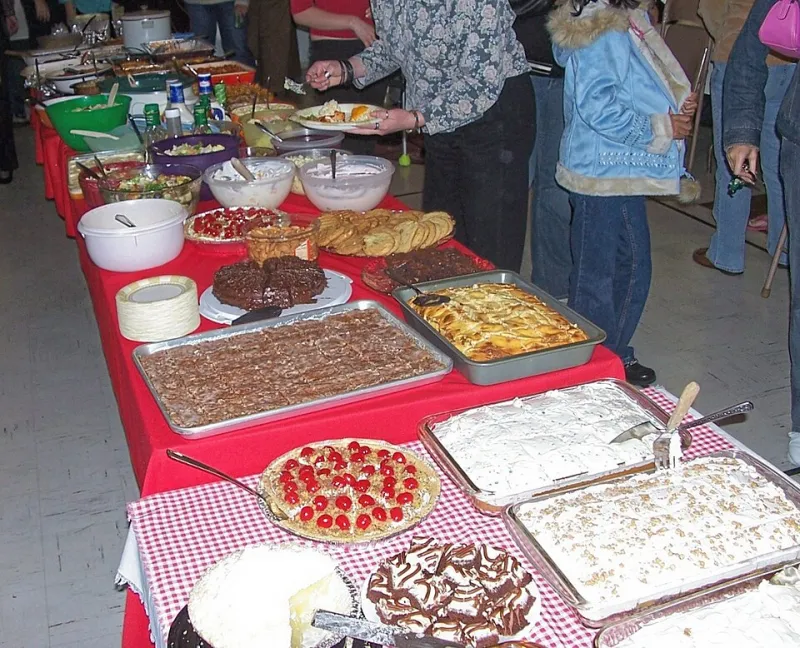
From Church Potluck to White Tablecloth: How Chefs Are Making Casseroles Fine Dining's Hottest Trend
Photo: elegant casserole dish upscale restaurant plating fine dining, via widata.s3-eu-central-1.amazonaws.com
For most of us, the word "casserole" conjures something very specific: a well-worn Pyrex dish, a kitchen that smells like cream of mushroom soup, and a table full of people who are genuinely happy to be there. It's not exactly the image you'd associate with a $200 tasting menu in a candlelit dining room with a sommelier hovering nearby.
And yet, here we are.
Across the country — from New York's lower east side to Austin's east sixth street to the trendier corners of Los Angeles — fine dining chefs are putting casserole-inspired dishes on their menus. Not as a joke. Not as irony. As a genuine statement about where American cooking is headed.
So what's actually going on here? Pull up a chair.
The Dish That Never Really Left
Before we dig into the fine dining angle, it's worth remembering that casseroles never actually went anywhere. They've been a constant in American home kitchens since the mid-20th century, surviving every food trend that tried to make them feel dated. Nouvelle cuisine came and went. Molecular gastronomy had its moment. Avocado toast had its era. Through all of it, someone's aunt was still making green bean casserole for Thanksgiving.
What's changed isn't the casserole itself — it's how chefs are choosing to look at it. A new generation of culinary professionals, many of whom grew up eating exactly these kinds of dishes, are approaching the format with fresh eyes and serious technique. They're not trying to save the casserole. They're trying to honor it.
What "Elevated" Actually Means Here
Let's be real: "elevated" is one of the most overused words in food media. But in the context of what's happening with casseroles in fine dining, it actually means something specific.
Chefs aren't just swapping out canned soup for homemade béchamel and calling it a day (though that's certainly part of it). They're rethinking the entire architecture of the dish — the layering, the texture contrast between crispy top and tender interior, the way a long, slow bake develops flavor in ways that quicker cooking methods simply can't replicate.
Think about it from a purely technical standpoint: a casserole is essentially a braise in a different container. You've got protein, aromatics, liquid, and heat working together over time to break down tough cuts and marry flavors in a way that's almost impossible to rush. That's not a limitation. That's a technique. And technique is exactly what fine dining chefs live for.
Some restaurants are leaning into heritage grains and hyperlocal ingredients — imagine a wild mushroom and farro gratin built on a base of locally sourced cream and finished with foraged herbs. Others are working with premium proteins, turning a deceptively simple chicken and root vegetable casserole into something that showcases a specific farm's heritage breed bird. The dish is still recognizable. The execution is something else entirely.
Nostalgia as a Culinary Language
There's a bigger cultural conversation happening here, and it's one that goes well beyond food trends.
American diners — particularly millennials and Gen X, who now represent a huge chunk of fine dining spending — grew up in the golden age of casserole culture. These are people whose emotional food memories are built around layered dishes that came out of the oven bubbling and golden. When a chef puts something on the menu that triggers that memory, even in a sophisticated new form, it creates a connection that's genuinely hard to manufacture any other way.
Restaurants have always understood that the best meals are emotional experiences. What's shifted is the recognition that comfort food carries as much emotional weight — sometimes more — than technically dazzling preparations that feel foreign or intimidating. A perfectly executed casserole-inspired dish can make a diner feel both impressed and completely at home at the same time. That's a rare and powerful combination.
Some industry observers have compared this to what happened with fried chicken and pizza over the past decade, when fine dining chefs started treating those "lowbrow" foods with the same rigor they'd apply to French classics. The results were transformative — and profitable. Casseroles feel like the next logical step in that progression.
The Price Tag Question
Okay, let's address the elephant in the room: should a casserole really cost $45 as a main course at a nice restaurant?
Honestly? That depends entirely on what's in it and how it's made. If a chef is sourcing premium ingredients, cooking low and slow with real stock and real cream, finishing with something genuinely special on top, and serving it in a beautifully designed individual vessel — yeah, the math can work out. You're paying for the sourcing, the time, the skill, and the experience.
What's interesting is that this pricing hasn't seemed to put diners off. If anything, the novelty of finding something so familiar done so exceptionally well has made these dishes some of the most talked-about items on their respective menus. People are posting their fancy tuna noodle casseroles on social media. That's not nothing.
What This Means for the Rest of Us
Here's the part we love most about this trend: it validates something that home cooks have known forever.
The casserole format is genuinely brilliant. It's forgiving, it's flexible, it rewards patience, and it feeds a crowd without breaking a sweat. When a Michelin-starred chef decides that a baked layered dish is worthy of their menu, they're essentially confirming what your grandmother already knew.
The techniques these chefs are using — making proper roux, building flavor in layers, choosing the right fat-to-liquid ratio, nailing the crust — are all things you can apply in your own kitchen. You don't need a restaurant budget or a culinary degree. You need a good dish, quality ingredients, and a little time.
At Casserole Crazy, we've always believed that the hot dish is one of the most underestimated formats in American cooking. Watching it take a victory lap in fine dining feels like a long-overdue moment of recognition. The casserole didn't need saving. It just needed people to pay attention.
And now, apparently, they're paying attention — and a $45 plate price — all at once.