Dish Decisions: What Your Casserole Pan Is Actually Doing to Your Food
Let's be honest. Most of us grabbed a casserole dish at some point — a wedding gift, a Target run, a hand-me-down from a relative who was downsizing — and we've been using it ever since without giving it much thought. It holds food, it goes in the oven, it comes to the table. Job done.
But here at Casserole Crazy, we think the dish itself deserves a little more respect. Because it turns out, the pan you cook in isn't just a container. It's an active participant in how your casserole develops — how fast the edges set, whether the bottom crisps up or stays soggy, how evenly the heat moves through that whole beautiful layered situation you've got going on. The right pan can be the difference between a casserole that's just fine and one that people are quietly fighting over for the last scoop.
So let's dig in.
Why Material Actually Matters
This is the part most recipes gloss over, and it's genuinely important. Different materials conduct and retain heat in very different ways, and those differences show up on your dinner plate.
Glass (Borosilicate): The classic Pyrex-style dish that lives in roughly 80% of American kitchens. Glass is a slow conductor, which means it takes longer to heat up — but once it's hot, it holds that heat well. The big advantage is that you can see what's happening on the bottom and sides of your dish, which is incredibly useful for judging doneness. The downside? Glass doesn't handle sudden temperature changes well. Going straight from freezer to a preheated oven is risky with older glass dishes. It also doesn't brown the bottom of a casserole quite as aggressively as some other materials, which is either a pro or a con depending on what you're making.
Ceramic: This is the material that looks the prettiest on the table, and it's not just about aesthetics. Ceramic heats slowly and very evenly, making it ideal for delicate casseroles that benefit from gentle, consistent cooking — think a custard-based egg bake or a scalloped potato situation where you want the layers to cook through without the edges getting tough. Ceramic also retains heat beautifully, so your casserole stays warm longer after it comes out of the oven. The tradeoff is that it's heavy and can chip if you're not careful.
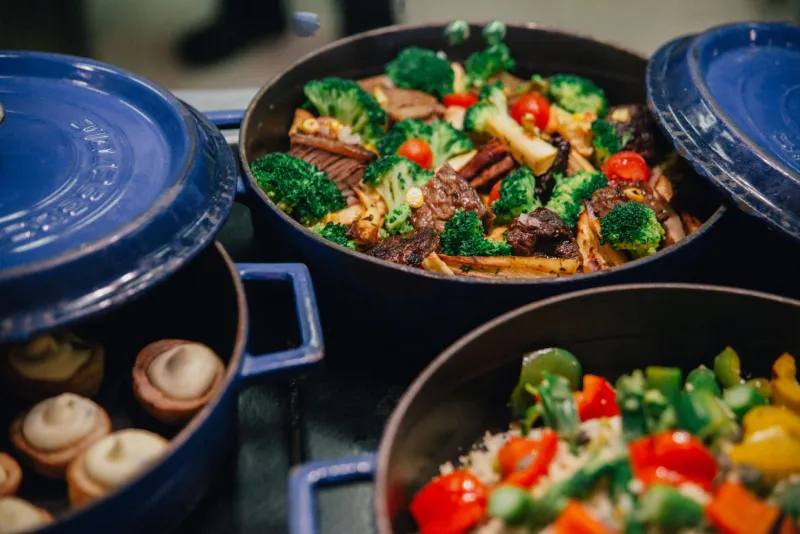
Cast Iron: This is the overachiever of the casserole world. Cast iron gets screaming hot and distributes that heat aggressively, which means incredible browning on the bottom and sides. If you want a crispy-edged mac and cheese or a deeply caramelized bottom layer on a shepherd's pie, cast iron is your friend. Enameled cast iron — think Le Creuset or Lodge's enamel line — gives you all those benefits without the maintenance headache of raw cast iron and without the risk of reactive surfaces affecting acidic ingredients like tomatoes. The obvious downside is cost and weight. A quality enameled Dutch oven or braiser is an investment, but it's one that lasts generations.
Metal (Aluminum or Stainless): These are the workhorses of the professional kitchen and the go-to for disposable foil pans, which have their place at potlucks and when cooking for a crowd. Metal conducts heat fast and aggressively, which is great for browning but can cause edges to overcook before the center catches up. If you're using a metal pan, keep an eye on your timing and consider dropping your oven temperature by 25°F compared to what the recipe suggests for glass or ceramic.
Size Isn't One-Size-Fits-All
Everybody knows the 9x13. It's the workhorse, the potluck standard, the casserole dish that launched a thousand green bean recipes. But limiting yourself to one size is genuinely holding you back.
A 2-quart dish (roughly 8x8 or 11x7) is one of the most underrated pieces of equipment in a home kitchen. It's perfect for smaller households, for side-dish casseroles, or for when you want to test a new recipe before committing to a full batch. It also bakes faster and more evenly than a larger pan because there's less thermal mass to deal with.
A deep 3- to 4-quart dish is what you want for lasagna, layered enchiladas, or anything that needs real vertical real estate. Trying to cram a true lasagna into a shallow 9x13 is a mess waiting to happen.
And don't overlook individual ramekins or gratin dishes. These aren't just for fancy restaurants. Making individual portions means every single serving has maximum crust-to-interior ratio, which is almost always the best possible outcome. They also make portion control effortless, which matters if you're cooking for people with different dietary needs.
The Specialized Equipment Worth Considering
Beyond the dish itself, a few tools can genuinely change your casserole game.
A good kitchen thermometer is non-negotiable if you're cooking casseroles with eggs, poultry, or pork. Visual cues can lie. An instant-read thermometer doesn't.
Tight-fitting lids matter more than most people realize. A covered casserole traps steam and keeps the interior moist, while an uncovered one allows evaporation and browning. Many recipes call for cooking covered for part of the time, then uncovered to develop a crust. If your dish doesn't have a lid, heavy-duty foil works — but a proper lid gives you better control.
A wire rack that fits inside a roasting pan lets you elevate a casserole dish for more even air circulation in the oven, which can help with uneven baking in older ovens with hot spots.
What You Can Skip
Not everything marketed toward casserole enthusiasts is worth your money. Casserole carriers are genuinely useful if you're regularly transporting food to potlucks or events, but the fancy insulated ones with built-in serving utensils and decorative patterns? The basic neoprene version does the same job for a fraction of the price.
Specialty "casserole stones" that promise to distribute heat more evenly are largely unnecessary if you already have a decent ceramic or cast iron dish. And unless you're cooking at very high altitude or dealing with a genuinely terrible oven, most adjustable baking collars and heat diffusers are solutions in search of a problem.
The Real Takeaway
You don't need to overhaul your entire kitchen setup to make better casseroles. But understanding what your equipment is actually doing — how your glass dish holds heat differently than cast iron, why an 8x8 pan bakes a small batch more evenly than a half-filled 9x13 — puts you in control instead of just hoping for the best.
Start with what you have. Learn its quirks. And if you're ever going to invest in one upgrade, make it a good quality enameled cast iron or ceramic dish in a size you'll actually use. Your casseroles will thank you, and so will everyone sitting around your table.